
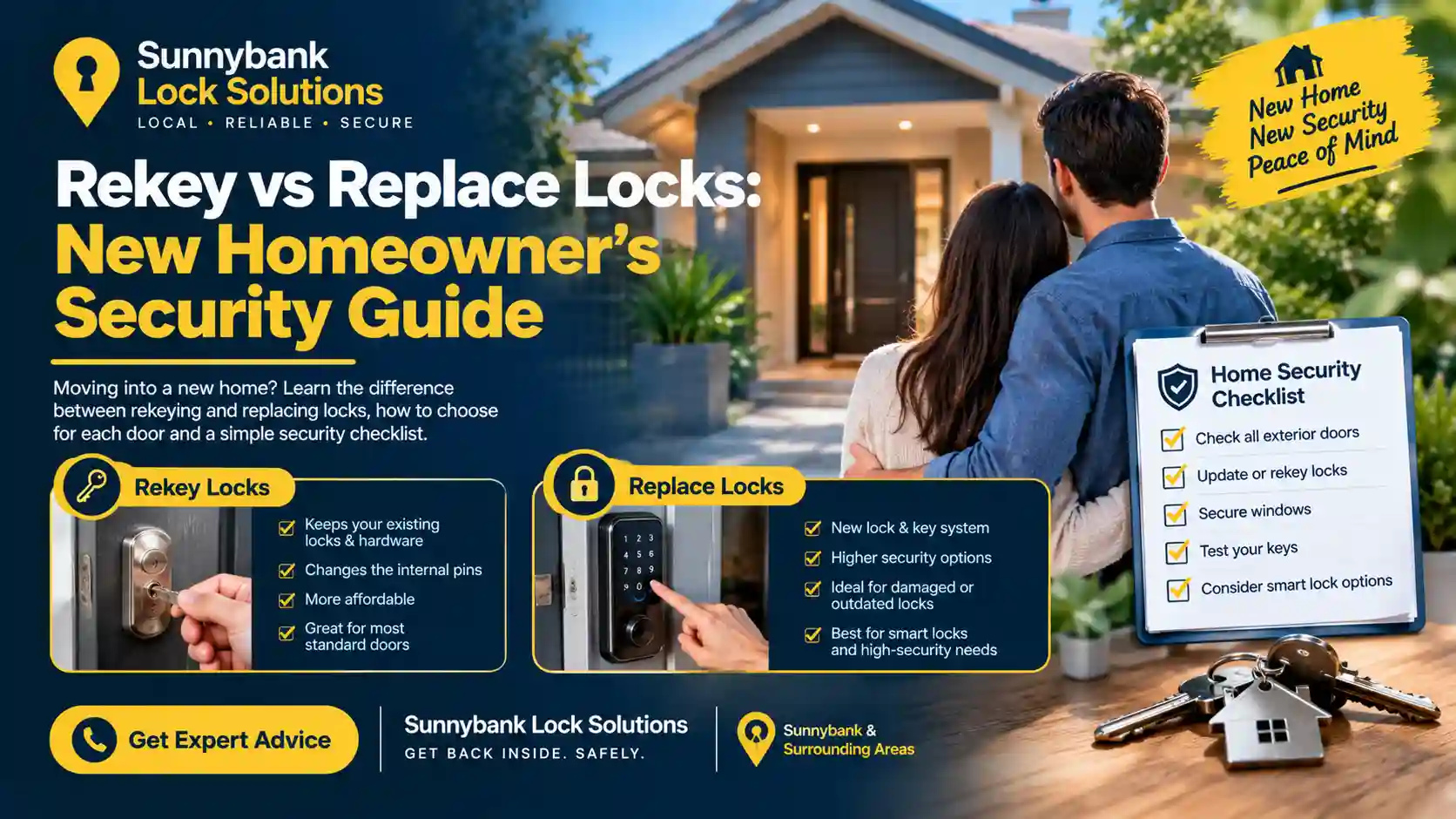
The keys are in your hand, the boxes are stacked in the hallway, and the home finally feels like yours. But there’s one question that’s easy to overlook in the excitement of moving in: who else still has a key?
Previous owners, tenants, agents, tradespeople, relatives and cleaners may all have held copies over the years, and you have no way of knowing how many are still out there. That’s why changing the locks is one of the first things security-conscious new homeowners and renters do. The question is whether to rekey or replace. This guide explains the difference, helps you choose for each door, and gives you a simple checklist for securing your new home.
Why Change the Locks When You Move In?
When you receive the keys to a home, you receive some keys, not necessarily all of them. Over the years, copies may have been made for family members, neighbours, house sitters, cleaners, real estate agents and contractors. Some will have been returned, and others will not.
Changing the locks means that only the keys you hold will work. It’s a simple step that gives you control over who can enter your home, and it’s far easier to do it at the start than after something goes wrong. It also means your insurer and your own peace of mind are on firmer ground.
What Does Rekeying Mean?
Rekeying alters the inside of your existing lock so that it works with a different key. A locksmith removes the lock’s cylinder, changes the small internal pins and fits the cylinder back in place. New keys are cut to match the new arrangement, and the old keys will no longer turn the lock.
The lock itself stays on the door, so there’s no need for new hardware. Rekeying is typically quick and cost-effective, and it can be done for several locks at once so that one key opens multiple doors.
What Does Replacing a Lock Mean?
Replacing a lock means removing the old lock entirely and installing a new one. The new lock comes with fresh keys, and the old keys are useless. Replacement is also an opportunity to upgrade, whether to a stronger deadbolt, a different style or a smart lock.
Because it involves new hardware, replacement is generally more expensive than rekeying. It’s the better choice when the existing lock is the problem, not just the keys.
How to Decide for Each Door
You don’t have to make the same decision for every door. A sensible approach is to look at each lock and ask a few questions.
Is the Lock in Good Condition?
If the lock turns smoothly, the key feels solid and there are no signs of damage, rekeying is usually all you need. If the lock sticks, feels loose, shows rust or wear, or looks like it has been tampered with, replacement is a safer choice.
Is It a Quality Lock?
Rekeying makes your keys unique, but it doesn’t make a weak lock stronger. If you’ve found a basic, low-quality lock on an important external door, this is a good opportunity to upgrade.
Do You Want Something Different?
If you’d prefer keyless entry, a keypad or a smart lock, you’ll need to replace the existing hardware. Rekeying only works with the lock you already have.
How Many Keys Do You Want to Carry?
Homes often have different locks on different doors, each with its own key. Rekeying or replacing locks so they all work with a single key is a practical upgrade that you’ll appreciate every day.
A Simple Rule of Thumb
| Situation | Usually the better choice |
|---|---|
| Lock works well, you just need new keys | Rekey |
| Lock is worn, damaged or sticking | Replace |
| You want a stronger lock | Replace |
| You want keyless or smart entry | Replace |
| You want one key for several doors | Rekey or replace |
| You’re on a tighter budget | Rekey where the locks are sound |
Your New Home Security Checklist
It’s easy to focus on the front door and forget everything else. Walk around your new home and consider every point of entry.
- Front door. Your main entry, and the place most worth investing in.
- Back door and laundry door. Often less visible from the street, and sometimes fitted with weaker locks.
- Side gates and garden gates. These control access to the rest of the property.
- Garage doors and internal garage entry. A common entry point that is often forgotten.
- Sliding doors and security screens. These need locks designed for them.
- Sheds and outbuildings. They often hold tools that could be used against you.
- Windows. Check that the latches and locks work properly.
- Letterbox and other keys. Don’t forget the smaller keys that give access to mail or storage.
A locksmith can look at all of these on one visit, and tell you which are fine and which need attention.
If You’re Renting
If you rent, the rules are different. Read your lease and speak to your landlord or property manager before changing any lock. In many cases, you’ll need written permission, and you may need to give a copy of the new key to the landlord or manager. Agreeing on this in advance avoids disputes later.
If you’re a landlord or property manager, rekeying between tenancies is an effective way to ensure that previous tenants no longer have access.
When to Do It
The best time to change your locks is as soon as you take possession, ideally before you start moving in valuable items. If you’ve already moved in, don’t wait for a problem to arise. A short appointment at any time still delivers the same peace of mind.
Other situations that call for a lock change include losing a key, a relationship breakdown, a housemate moving out, a break-in or attempted break-in, or letting go of a tradesperson or cleaner who held a key.
What to Expect From the Appointment
A locksmith will usually start by checking the condition of your locks. For rekeying, they remove the cylinder, change the pins, cut new keys and test them. For replacement, they remove the old lock, fit the new one and make sure it works smoothly.
Before they leave, test each key in each lock and make sure the doors close and lock properly. Ask for the number of keys you need, including spares, so you’re not caught out later. If you want advice on locks, door strength or other upgrades, this is a good time to ask.
Looking After Your New Keys
Once you’ve secured your home, keep it that way.
- Keep a record of who holds keys. It’s much easier to manage access when you know where every copy is.
- Avoid hiding keys outside. Under a mat or in a pot is the first place anyone looks.
- Leave a spare with someone you trust. It’s a safer alternative that still protects you from a lockout.
- Use restricted or high-security keys where it matters. These are harder to copy without authorisation.
- Revisit your locks after major changes. If circumstances change, so should your keys.
Common Mistakes New Homeowners Make With Locks
A few simple oversights can leave a newly purchased or rented home less secure than it should be.
- Assuming the locks were changed by the previous owner. Unless you have proof, it’s safest to assume they weren’t.
- Only changing the front door. Back doors, garage entries and side gates are just as important, and are often easier targets.
- Leaving old keys in circulation. If the previous owner, an agent or a tradesperson still has a copy, your new locks only help if they’re changed or rekeyed.
- Ignoring a worn lock because it still works. A lock that is stiff or loose is often close to failing, and it tends to fail at the worst time.
- Waiting until after a problem. Changing locks after a break-in is far more stressful than doing it calmly on moving day.
Taking an hour to review your locks when you move in is one of the most cost-effective things you can do for your home’s security.
How Rekeying and Replacing Fit Into Your Moving Budget
Moving costs add up quickly, so it’s natural to want to spend as little as possible on locks. The good news is that you don’t have to choose between security and budget. Rekeying sound locks is usually the more affordable route, and it delivers the same protection against old keys. Where a lock is worn or weak, spending a little more on replacement can prevent a larger bill later.
A locksmith can give you a clear quote that separates what must be done now from what could wait. That way, you can secure the most important doors first and plan upgrades for the others over time.
Final Thoughts
Securing a new home doesn’t need to be complicated. A locksmith can assess your existing locks, explain whether rekeying or replacing makes more sense for each door, and give you a clear quote before any work begins.
Whether you rekey, replace or do a mix of both, the aim is the same: knowing exactly who holds a key to your home. Review each door, deal with the most important entry points first, and you’ll start your time in the property with confidence.