
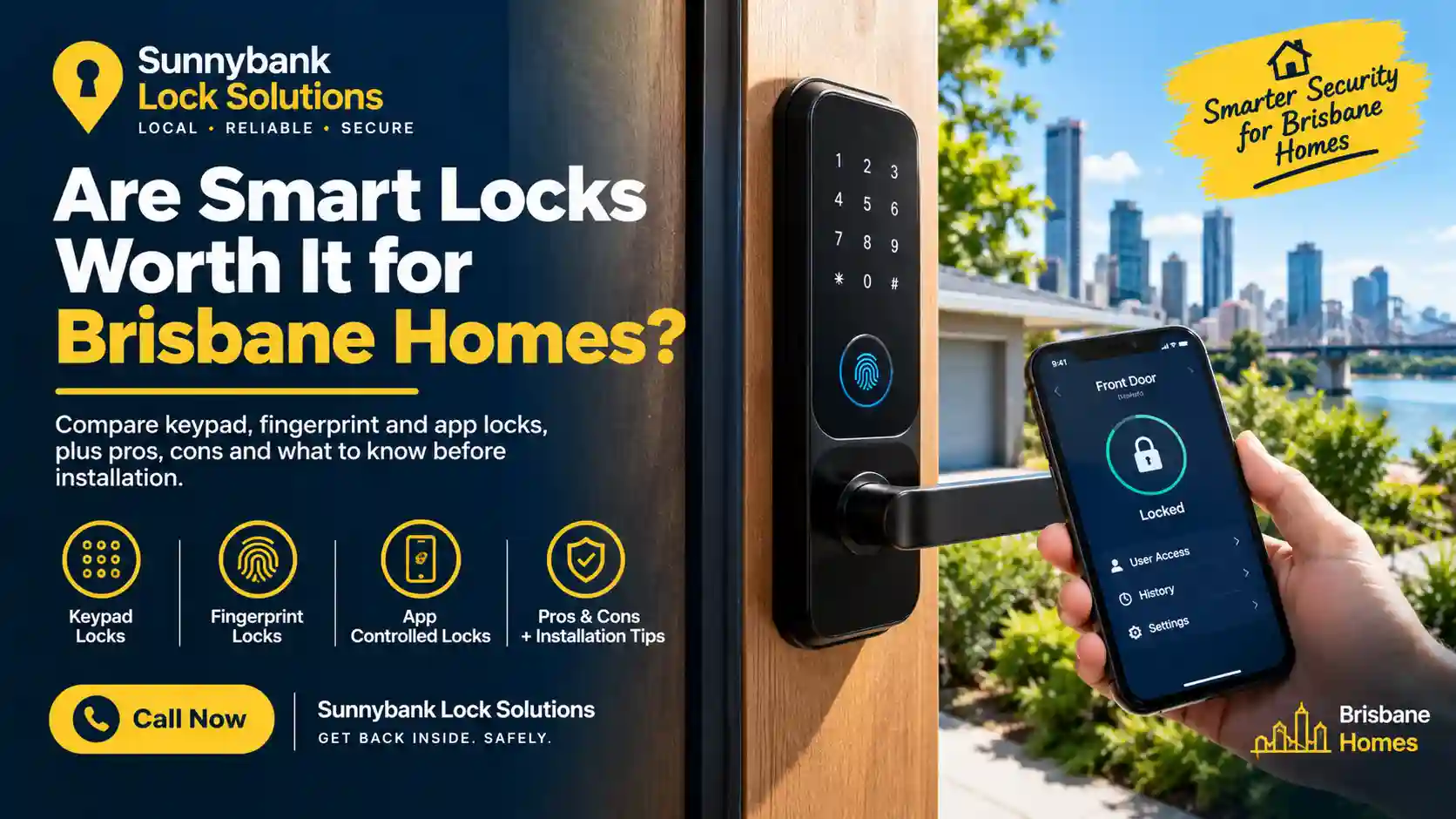
Smart locks have moved from gadget territory to everyday home hardware. More Brisbane households are swapping metal keys for codes, cards, fingerprints and phone apps, and it’s easy to see the appeal. No more hunting for keys, no more hiding a spare under a pot plant, and no more worrying about who has a copy.
But a smart lock is also a bigger purchase than a standard lock, and not every product on the market is a good one. So are they actually worth it? This guide covers how smart locks work, their real advantages and drawbacks, and what to consider before smart lock installation in Brisbane, so you can decide whether one suits your home.
What Is a Smart Lock?
A smart lock is an electronic lock that lets you unlock your door without using a traditional metal key. Depending on the model, you might open it with a keypad code, a key card, a fingerprint, a remote or a smartphone. Most smart locks still include a mechanical key option as a backup, which is a useful safety net.
Some smart locks replace your entire existing lock, while others fit over your existing deadbolt and keep the outside keyhole. The right design depends on your door, your lock and how you want to use it.
The Main Types of Smart Locks
Keypad Locks
You enter a numerical code on a keypad to unlock the door. They’re simple, reliable and easy to share with family, guests or tradespeople. They’re a popular first step into keyless entry.
Fingerprint Locks
These unlock when you place a registered finger on a sensor. They’re fast and convenient, and nothing needs to be remembered or carried. Quality varies, so choosing a good brand matters.
Bluetooth and Wi-Fi Locks
These connect to a phone app, so you can lock and unlock the door, share access remotely and sometimes check who has entered. They suit people who like to manage things from their phone.
Card and Fob Locks
You tap a card or fob on the lock to open it. They work well for households with children and for small workplaces, because a lost card can be cancelled without changing the lock.
Combination Models
Many modern smart locks combine several methods, such as a keypad, a fingerprint and a mechanical key. Having more than one way in is useful if one method fails.
The Real Benefits of a Smart Lock
- No more lost keys. If you or your family regularly misplace keys, keyless entry removes the problem and the lockout calls that come with it.
- Flexible access. You can give a temporary code to a cleaner, a house sitter or a tradesperson, and remove it afterwards. No spare keys get lost or copied.
- Easy for the whole household. Children and older family members can enter with a code or a fingerprint, with no key to carry or drop.
- Useful for short-term rental hosts. You can set unique codes for each guest and avoid key handovers.
- Hands-free convenience. When you’re carrying shopping or a baby, a quick tap or code is far easier than finding a key.
- Activity records. Some models log entries, which many families find reassuring.
The Drawbacks You Should Know About
Smart locks are not perfect, and it’s important to weigh the downsides honestly.
- They need power. Most run on batteries. If the batteries run flat, you need a backup, which is why a mechanical key option or an external power connection is valuable.
- Quality varies widely. A well-built lock from a reputable brand is a different product from a bargain unit with weak internals.
- They cost more than standard locks. The price depends on the brand and features, and installation adds to the total.
- Technology can fail. Electronics, sensors and apps can malfunction. Choose a model with a proven track record.
- Codes can be shared or observed. Pick a code that is not easy to guess, and change it when circumstances change.
Are Smart Locks Secure?
A well-made smart lock can be every bit as secure as a good mechanical lock, and in some respects it offers more control. You can cancel a lost card or remove a code instantly. But security depends on several things working together: the lock’s quality, the strength of the door and frame, correct installation and sensible use.
A smart lock on a flimsy door or a poorly aligned frame won’t protect you well. The same goes for a weak code, such as a birthday or a repeated number. Think of the smart lock as one part of your overall door security, not a replacement for a solid door.
Which Doors Suit a Smart Lock?
Smart locks can be used on many doors, but some suit them better than others.
- Front door: The most common choice. It’s the door you use most and the one where convenience pays off.
- Back and side doors: Useful for families and for access to outdoor areas.
- Garage entry doors: A keypad is handy when you’re carrying items or coming back from a run.
- Studios and granny flats: Easy to manage access for guests or tenants.
- Small businesses: Card and code systems make it simple to control staff access.
Brisbane’s warm, humid climate and heavy summer storms are worth keeping in mind. If your door is exposed to rain or direct sun, choose a lock designed to handle the weather, and have it installed properly.
Will It Fit Your Existing Door?
Not every smart lock fits every door. Before you buy, consider:
- Door thickness and material. Timber, metal and glass doors may need different fittings.
- Existing cut-outs. Some smart locks match standard cut-outs, while others need the door to be modified.
- Your existing lock type. Some models replace the whole lock, while others add to a deadbolt you already have.
- Door alignment. If your door sticks or doesn’t close squarely, a smart lock won’t function reliably until it’s corrected.
A locksmith can check these details before you spend money, and tell you which models suit your door.
Why Professional Installation Matters
It might be tempting to install a smart lock yourself, but a poor installation is one of the most common reasons these locks disappoint. A professional makes sure the bolt lines up with the frame, the strike plate is secure, the electronics are correctly set up and the door operates smoothly.
A locksmith will also set up your codes, cards or fingerprints, show you how to use the lock, and make sure the mechanical backup works. That small investment protects the lock’s performance and lifespan.
Smart Lock or Traditional Deadbolt?
If you’re torn, here’s a simple way to think about it.
- Choose a smart lock if you lose keys often, share access with others, host guests, or simply want a more convenient way in.
- Choose a traditional deadbolt if you prefer simplicity, don’t want to manage batteries, or have a limited budget.
- Consider both. Many homes use a smart lock on the main door and a quality deadbolt elsewhere, or a smart lock that includes a mechanical key.
Questions to Ask Before You Buy
- Does it have a mechanical key or backup power option?
- How long do the batteries last, and how will I know when they’re low?
- Is it suited to Brisbane’s weather and my door’s exposure?
- Will it fit my existing door and frame?
- Who will install it, and are they licensed and insured?
- What support is available if something goes wrong?
Looking After a Smart Lock Once It’s Installed
A smart lock is low-maintenance, but it isn’t maintenance-free. A few simple habits keep it working reliably for years.
- Replace batteries early. Don’t wait for the lock to stop working. Most models warn you when the battery is low, so act on it promptly.
- Test the mechanical key. Make sure your backup key still works, and keep it somewhere safe but accessible.
- Update your codes. Change your keypad code periodically, and remove temporary codes when they’re no longer needed.
- Keep the lock clean. Wipe away dust and dirt, particularly on keypads and fingerprint sensors, which can become less responsive when dirty.
- Check the door alignment. If the door starts to sag or stick, the bolt may not line up properly. Have it checked before it causes a failure.
- Keep installation details handy. Know the brand and model of your lock, in case you need help or replacement parts later.
With sensible care, a quality smart lock will give you years of convenient, dependable service.
Who Benefits Most From a Smart Lock?
Smart locks are useful for many households, but some benefit more than others. Busy families with children who come and go at different times appreciate not having to hand out keys. Short-term rental hosts can issue guest codes without meeting every visitor. Homeowners who employ cleaners, gardeners or tradespeople can grant access without cutting spare keys. And anyone who has ever stood outside a locked door searching their pockets will understand the appeal immediately.
If none of these sound like you, a quality traditional lock may still be the simplest and most economical choice. The best lock is the one that suits how you actually live.
Is a Smart Lock Right for Your Home?
A smart lock can make daily life easier and your home easier to manage, provided you choose a quality product and have it fitted properly. A good installation also includes setting up your codes or cards and learning how to use the lock effectively.
The right choice comes down to your doors, your household and your budget. Consider how you use each entry point, whether a backup key matters to you, and how much convenience is worth, and you’ll be well placed to decide.